

Quick Links
Regional Corridor Transportation Plan
Upper Valley Strong COVID-19 Regional Info/Assistance
UVLSRPC Household Hazardous Waste Website
UVLSRPC Waste Management Website


Follow Us on Social Media!
Project Resources
Related Documents
Related Websites
- Energy Efficiency for Rural Water Supplies - Operator Education
- Energy Efficiency for Rural Water Supplies - Municipal Planning
- Lake Sunapee Protective Association Intrastructure Project
- Granite State Rural Water Association
- Innovative Land Use Planning Techniques Handbook - Template Ordinances
- NH Homeland Security & Emergency Managment
- US EPA Water Sense
- Report: Land Conservation and the Future of America's Drinking Water, Protecting the Source
UVLSRPC Projects
Project Administrator:
Michael McCrory
Project Title:
Energy Efficiency for Rural Water Supplies
Related Services:
Energy, Land Use Planning, Natural Resources, Emergency Management
Project Summary:
Public water systems are diverse in their size, needs and complexity. Significant work has been done influencing large, typically urban water systems that serve larger populations. Rural systems have received less direct attention because of their small size and the perception that improvements will have limited impact in the larger, national energy efficiency initiative. This region contains 35 public water systems serving 46,358 residents. According to the EPA about 20% of the treated drinking water is lost to leakages in existing pipe networks. This is a significant energy efficiency issue because, when leaks are present, the electrical demand of pumping the water increases to meet demand and/or to maintain adequate operational pressures in the distribution network, in the attempt to compensate for the 20% that is lost.
The Upper Valley lake Sunapee Regional Planning Commission(UVLSRPC), with its project partners, created an educational program for rural water supply operators. The initiative included targeted energy assessments of water treatment plants and a workshop where operators could share knowledge of how systems work and energy efficient solutions for day to day operations. The Commission also worked with municipal leaders through facilitating joint municipal meetings in the Lake Sunapee watershed to address water supply and energy efficiency issues from the perspective of the municipal leaders.
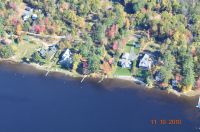
Lake Sunapee is the drinking water source for nearly 2,100 residents who are part of a community water supply system and hundreds more residents who rely on private wells. It is also one of the sources of the Sugar River which provides back-up drinking water supply in Claremont serving another 9,000 residents.
Additional Information
Funders:
- US Department of Energy, Energy Efficiency and Conservation Block Grant Program